

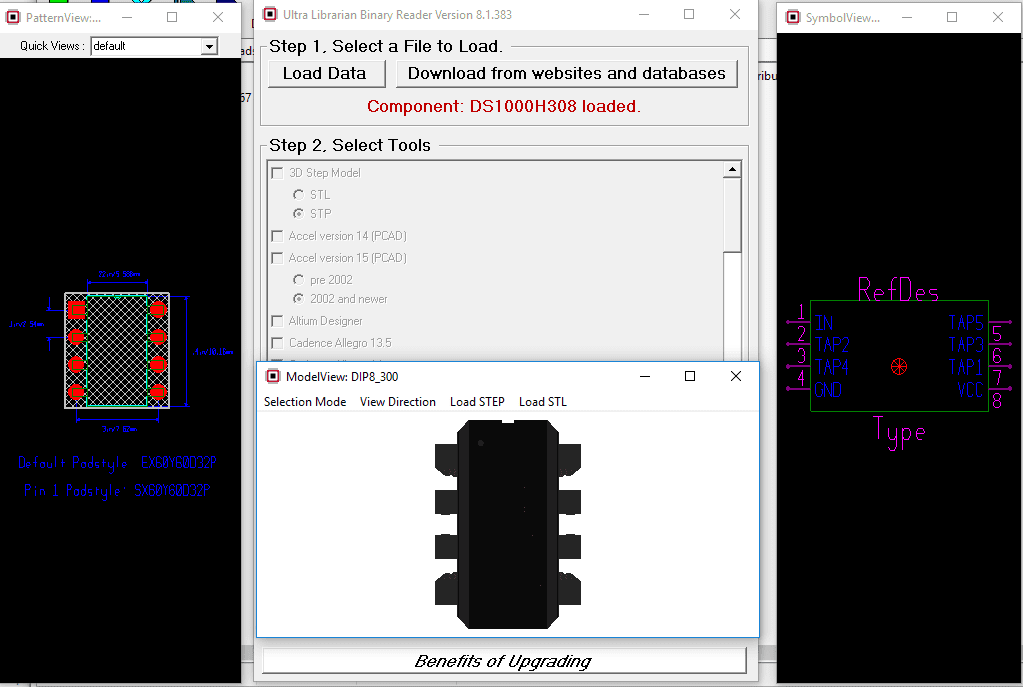
CREATE SYMBOLS, FOOTPRINTS, AND 3D MODELS FROM PRE-AUTHORED DATA

ULTRA LIBRARIAN FREE READER

Preview models prior to downloading

Choose from over 20 different CAD export options

ladyboy big ass
CONVERT BXL FILES INTO YOUR PREFERRED CAD FORMAT

The free reader is a lite version of Ultra Librarian specifically designed to import vendor neutral CAD data (.bxl files) from manufacturers’ websites and then export symbols, footprints, and 3D models to specific CAD tool formats. The reader is a read-only tool and will not allow users to make any changes to the data. For symbols, footprints, and 3D model creation capabilities, use one of the Ultra Librarian Desktop Software options.

BXL FILES FROM YOUR FAVORITE IC MANUFACTURERS

Many of our IC partners offer BXL files for their components directly on their websites. Once you have obtained a BXL file it is quick and easy to convert to your preferred CAD format through our online BXL conversion tool.

Check out all manufacturers here.

EXPORT TO OVER 30 DIFFERENT CAD FORMATS

VENDOR NEUTRAL FILES

Accel EDA 14 & 15

  • DesignSpark
  • Mentor Graphics
  • BoardStation
  • Mentor Graphics Design Architect
  • Mentor Graphics Design
  • Expedition 99 and 2000
  • PCAD 2000, 2001, 2002, 2004, and 2006
  • STL
  • TARGET 3001!
  • View Logic ViewDraw
  • Zuken CadStar 3 and 4
  • Zuken CR-5000 and CR-8000

FREQUENTLY ASKED QUESTIONS

A .BXL file contains electronic data created by Ultra Librarian in a universal format and is used for distributing PCB information. .BXL files can be opened by the Ultra Librarian Free Reader and translated into your choice of 22 different CAD formats.

Ultra Librarian has partnered with major IC manufacturers to create electronic data representing their parts and are available to the public. Partners include Analog Devices, Texas Instruments, Microchip, Maxim, Silicon Labs, Renesas, Exar, and NXP.

Yes, you can use our Online Reader if you don’t want to download the Free Reader

Free Reader

"*" indicates required fields

The Intersection of Identity and Culture: Understanding the Ladyboy Phenomenon**

However, not everyone views ladyboys in a positive light. Some people may see them as a threat to traditional gender norms or as individuals who are “confused” about their identity. This lack of understanding can lead to marginalization, discrimination, and social exclusion.

For many ladyboys, self-expression is a powerful tool for empowerment. By embracing their identity and expressing themselves authentically, ladyboys can assert their individuality and challenge societal norms. This can involve a range of activities, from fashion and beauty to performance and art.

As we move forward, it is crucial to continue challenging stereotypes and stigmas, promoting education and awareness, and supporting the empowerment and self-expression of ladyboys and other marginalized communities. By doing so, we can work towards a more inclusive and accepting society, where individuals can live authentically and without fear of persecution or exclusion.

Despite the growing visibility of ladyboys, many stereotypes and stigmas persist. One of the most significant challenges facing ladyboys is the risk of social exclusion and marginalization. Many ladyboys face discrimination in the workplace, in education, and in their personal lives, simply because of their identity.

In the context of ladyboys, a “big ass” is often seen as a symbol of femininity and attractiveness. This can be reflected in the way ladyboys dress, with many opting for tight-fitting clothing that accentuates their curves. The physical attribute of a “big ass” has also become a topic of interest in online communities, with many individuals discussing and sharing images of ladyboys who possess this characteristic.

When it comes to ladyboys, physical appearance plays a significant role in their identity and self-expression. For some, having a “big ass” is seen as a desirable physical characteristic, often achieved through a combination of genetics, exercise, and fashion. This emphasis on physical appearance can be attributed to the cultural significance of beauty and femininity in many Asian societies.

To combat these stereotypes and stigmas, it is essential to promote understanding, acceptance, and inclusivity. By sharing the stories and experiences of ladyboys, we can work to break down barriers and challenge societal norms. This can involve educating ourselves and others about the complexities of identity, culture, and self-expression.

In Thailand, ladyboys are often viewed as a natural part of the cultural landscape. Many Thais see ladyboys as individuals who are simply expressing themselves in a way that feels authentic to them. This acceptance is reflected in the country’s vibrant nightlife, where ladyboys often perform in cabarets and clubs, showcasing their talents and charisma.

In recent years, there has been a growing trend towards greater visibility and acceptance of ladyboys in mainstream culture. This has included the rise of social media influencers, celebrities, and public figures who identify as ladyboys or support the ladyboy community.

The phenomenon of ladyboys, including the significance of a “big ass,” is complex and multifaceted. By exploring the cultural, social, and personal aspects of this identity, we can work to promote greater understanding, acceptance, and inclusivity. Ultimately, it is essential to recognize the diversity and individuality of ladyboys, and to celebrate their unique experiences and perspectives.

In many cultures, particularly in Southeast Asia, the term “ladyboy” has become a colloquialism used to describe individuals who identify as male but exhibit traditionally feminine characteristics, often including physical appearance and mannerisms. One aspect that has garnered significant attention is the physical attribute of a “big ass,” which has become a topic of interest and discussion.

The term “ladyboy” is often used interchangeably with “transgender” or “trans woman,” although it is essential to note that these terms are not synonymous. Ladyboys typically identify as male but adopt feminine characteristics, such as dressing in women’s clothing, wearing makeup, and exhibiting feminine behavior. This identity is deeply rooted in cultural and societal norms, particularly in countries like Thailand, where ladyboys have become an integral part of the social fabric.


the pcb design, assembly, and trends blog

RELATED CONTENT

Ladyboy Big Ass Apr 2026

The Intersection of Identity and Culture: Understanding the Ladyboy Phenomenon**

However, not everyone views ladyboys in a positive light. Some people may see them as a threat to traditional gender norms or as individuals who are “confused” about their identity. This lack of understanding can lead to marginalization, discrimination, and social exclusion.

For many ladyboys, self-expression is a powerful tool for empowerment. By embracing their identity and expressing themselves authentically, ladyboys can assert their individuality and challenge societal norms. This can involve a range of activities, from fashion and beauty to performance and art.

As we move forward, it is crucial to continue challenging stereotypes and stigmas, promoting education and awareness, and supporting the empowerment and self-expression of ladyboys and other marginalized communities. By doing so, we can work towards a more inclusive and accepting society, where individuals can live authentically and without fear of persecution or exclusion. ladyboy big ass

Despite the growing visibility of ladyboys, many stereotypes and stigmas persist. One of the most significant challenges facing ladyboys is the risk of social exclusion and marginalization. Many ladyboys face discrimination in the workplace, in education, and in their personal lives, simply because of their identity.

In the context of ladyboys, a “big ass” is often seen as a symbol of femininity and attractiveness. This can be reflected in the way ladyboys dress, with many opting for tight-fitting clothing that accentuates their curves. The physical attribute of a “big ass” has also become a topic of interest in online communities, with many individuals discussing and sharing images of ladyboys who possess this characteristic.

When it comes to ladyboys, physical appearance plays a significant role in their identity and self-expression. For some, having a “big ass” is seen as a desirable physical characteristic, often achieved through a combination of genetics, exercise, and fashion. This emphasis on physical appearance can be attributed to the cultural significance of beauty and femininity in many Asian societies. The Intersection of Identity and Culture: Understanding the

To combat these stereotypes and stigmas, it is essential to promote understanding, acceptance, and inclusivity. By sharing the stories and experiences of ladyboys, we can work to break down barriers and challenge societal norms. This can involve educating ourselves and others about the complexities of identity, culture, and self-expression.

In Thailand, ladyboys are often viewed as a natural part of the cultural landscape. Many Thais see ladyboys as individuals who are simply expressing themselves in a way that feels authentic to them. This acceptance is reflected in the country’s vibrant nightlife, where ladyboys often perform in cabarets and clubs, showcasing their talents and charisma.

In recent years, there has been a growing trend towards greater visibility and acceptance of ladyboys in mainstream culture. This has included the rise of social media influencers, celebrities, and public figures who identify as ladyboys or support the ladyboy community. For many ladyboys, self-expression is a powerful tool

The phenomenon of ladyboys, including the significance of a “big ass,” is complex and multifaceted. By exploring the cultural, social, and personal aspects of this identity, we can work to promote greater understanding, acceptance, and inclusivity. Ultimately, it is essential to recognize the diversity and individuality of ladyboys, and to celebrate their unique experiences and perspectives.

In many cultures, particularly in Southeast Asia, the term “ladyboy” has become a colloquialism used to describe individuals who identify as male but exhibit traditionally feminine characteristics, often including physical appearance and mannerisms. One aspect that has garnered significant attention is the physical attribute of a “big ass,” which has become a topic of interest and discussion.

The term “ladyboy” is often used interchangeably with “transgender” or “trans woman,” although it is essential to note that these terms are not synonymous. Ladyboys typically identify as male but adopt feminine characteristics, such as dressing in women’s clothing, wearing makeup, and exhibiting feminine behavior. This identity is deeply rooted in cultural and societal norms, particularly in countries like Thailand, where ladyboys have become an integral part of the social fabric.