Written by Soetsu Yanagi, a Japanese philosopher and art critic, “The Unknown Craftsman” was first published in 1972 and has since become a classic in the field of Japanese aesthetics. The book is a collection of essays that Yanagi wrote over the course of his life, in which he explores the concept of “wabi-sabi,” or the beauty of imperfection.
One of the key concepts that Yanagi explores in “The Unknown Craftsman” is the idea of the “unknown craftsman.” This refers to the anonymous artisans who have created some of Japan’s most beautiful and enduring works of art. These craftsmen were not famous or celebrated in their lifetimes, but their work has stood the test of time and continues to be admired and revered today.
One of the key takeaways from “The Unknown Craftsman” is the importance of humility in the creative process. Yanagi argues that the pursuit of perfection is a form of arrogance, one that ignores the imperfections and limitations that are inherent in all things. In contrast, the unknown craftsman’s approach is humble and accepting, recognizing that imperfections are a natural part of the creative process. the unknown craftsman a japanese insight into beauty pdf
At its core, wabi-sabi is a philosophy that values the imperfect, the impermanent, and the incomplete. It is a way of seeing the world that is deeply rooted in Japanese culture and is reflected in the country’s art, architecture, and literature. Yanagi argues that the pursuit of perfection is a Western concept, one that is based on the idea that things can be made perfect through human effort. In contrast, the Japanese approach is to accept and even celebrate the imperfections that are inherent in all things.
The Unknown Craftsman: A Japanese Insight into BeautyIn a world where perfection is often strived for, the concept of imperfection can be a difficult one to grasp. However, in traditional Japanese aesthetics, imperfection is not only accepted but also celebrated as a key component of beauty. This philosophy is beautifully encapsulated in the book “The Unknown Craftsman: A Japanese Insight into Beauty,” a collection of essays that explore the intersection of art, craft, and beauty in Japan. Written by Soetsu Yanagi, a Japanese philosopher and
The book is also notable for its exploration of the concept of “sabi,” which refers to the beauty of age and wear. Sabi is the idea that things become more beautiful as they age and acquire imperfections. This concept is often reflected in the Japanese love of antique objects, which are valued for their imperfections and the stories that they tell.
This approach to art is reflected in the concept of “yūgen,” which is often translated as “profound and mysterious sense of the beauty of the world.” Yūgen is a key concept in Japanese aesthetics and is often associated with the art of Noh theater and haiku poetry. It is a sense of wonder and awe that arises from the contemplation of the imperfect and impermanent nature of all things. These craftsmen were not famous or celebrated in
The book has been widely praised for its insights into Japanese culture and aesthetics. As a PDF, it is widely available and can be easily accessed by anyone interested in learning more about this fascinating topic.
Kali + Additional Tools + Vulnerable Applications in Docker containers...
A vulnerable VM that you will use to perform a full assessment (from reconnassaince to full compromise)
Another vulnerable VM that you will use to perform a full assessment (from reconnassaince to full compromise)
This video explains how to setup the virtual machines in your system using Virtual Box.
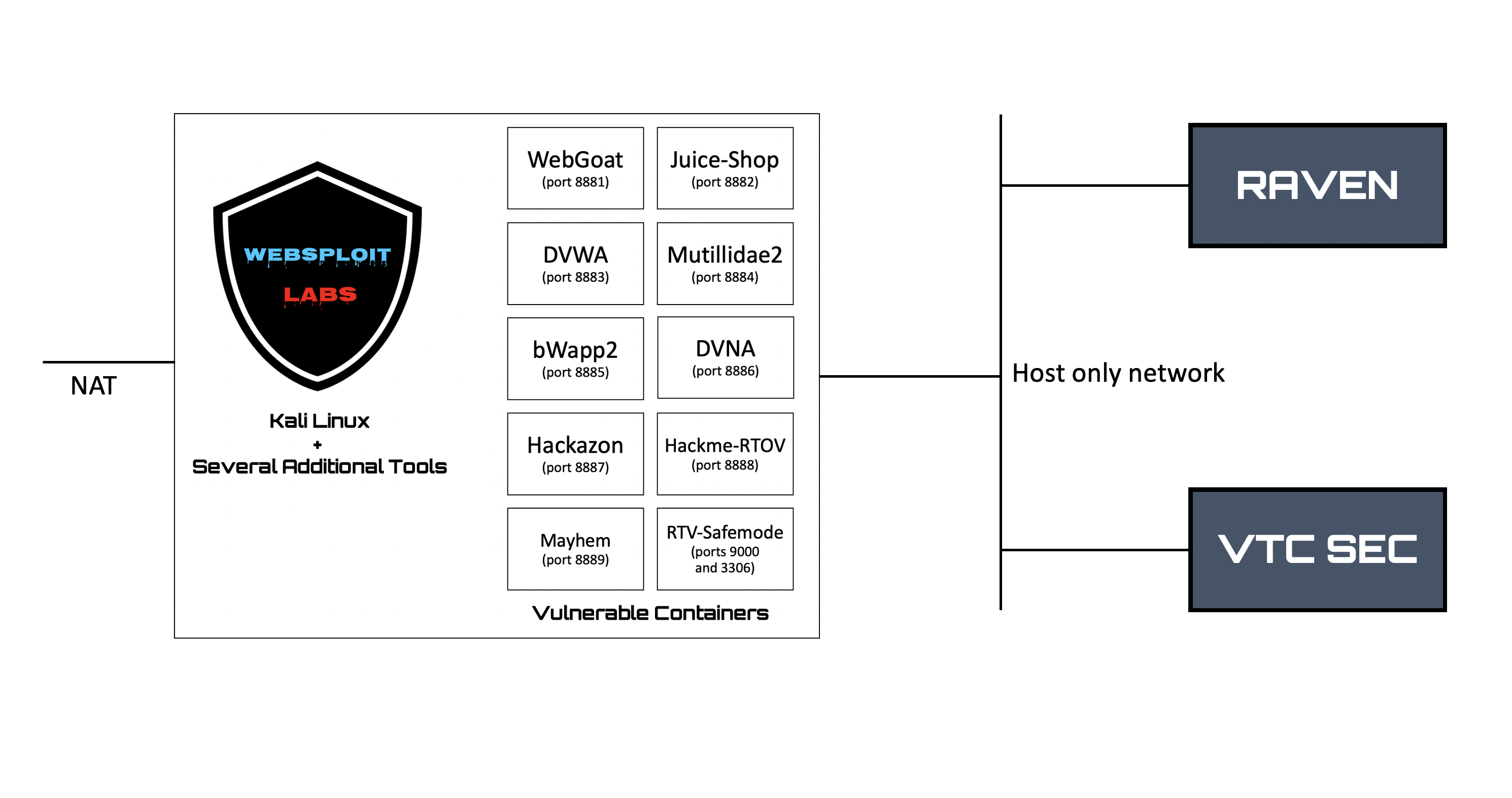
The diagram below shows the lab architecture with WebSploit Full version, Raven, and VTCSEC. The VMs were created in Virtual Box. It is highly recommended that you use Virtual Box. However, if you are familiar with different virtualization platforms, you should be able to run the VMs in VMWare Workstation Pro (Windows), VMWare Fusion (Mac), or vSphere Hypervisor (free ESXi server).
You should create a VM-only network to deploy your vulnerable VMs and perform several of the attacks using WebSploit (Kali Linux), as shown in the video above. You can configure a separate network interface in your WebSploit VM to connect to the rest of your network and subsequently the Internet. Preferably, that interface should be in NAT mode.
Stay in Touch with Omar!